
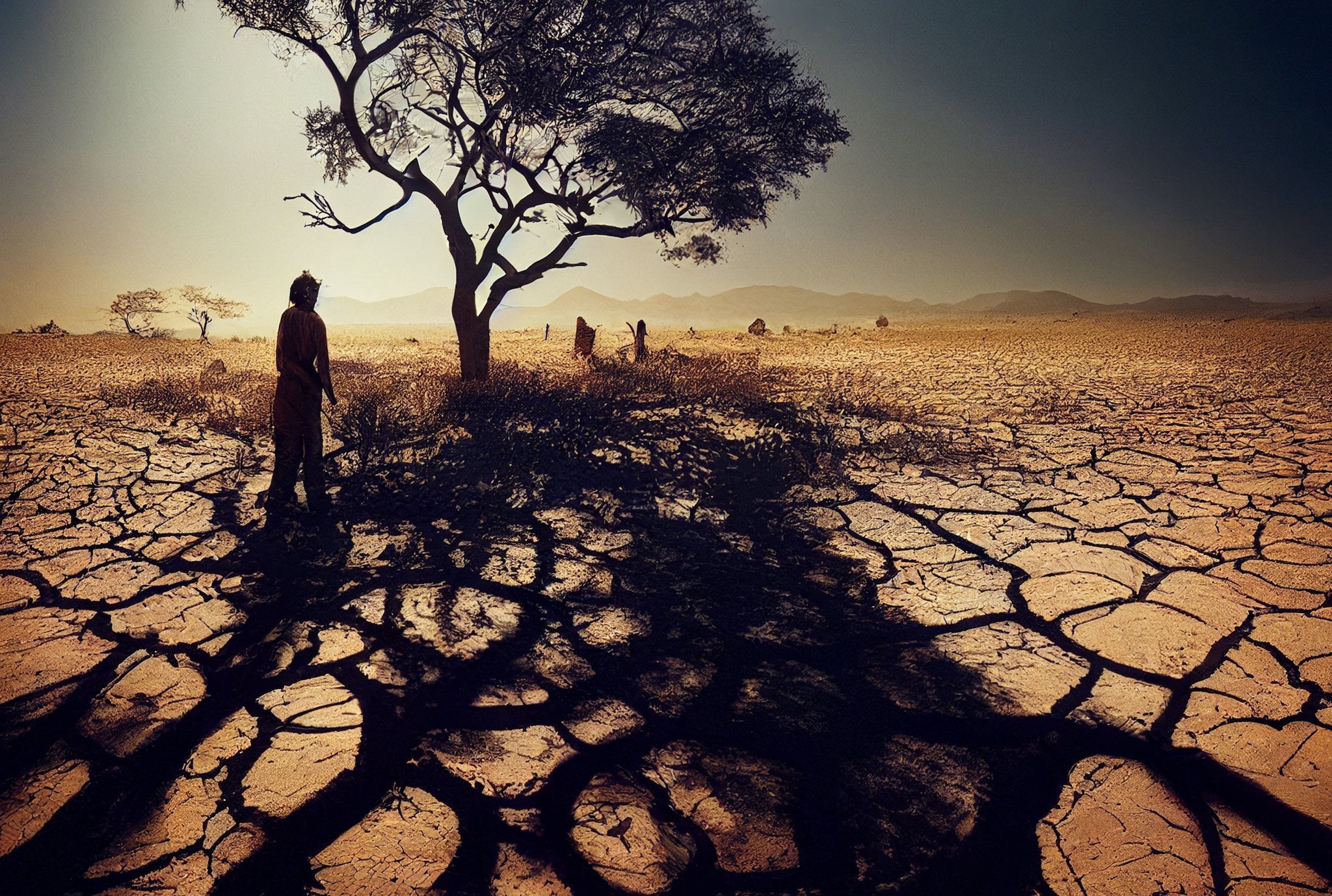
Due to climate change, more people will have to flee their homes in the future. Is the protection under the UN Refugee Convention sufficient? Eilidh Beaton proposes a reform.
LTO: The ongoing refugee crisis will intensify in the coming decades due to climate change. How are refugees currently protected under the law?
Eilidh Beaton: The most important instrument in international law for refugee protection is the UN Refugee Convention of 1951 and its Protocol of 1967. There are two main requirements for refugee status in that instrument. First, the persecution condition which requires that a person has a well-founded fear of persecution for reasons of race, religion, nationality, social membership or political opinion. The second requirement is the alienage condition which states that a person has to have left the territory of their home state in order to qualify for refugee status.
Furthermore, we have complementary forms of protection, for instance the Temporary Protection Directive of the European Union. With regard to the protection of Internally Displaced People (IDPs), there are the UN Guiding Principles on Internal Displacement.
Is the existing legal framework sufficient to protect refugees?
Both the alienage and the persecution condition of the Refugee Convention have received a lot of critical feedback. The complementary forms of refugee protection fill some protection gaps, but they are more variable. States regularly have wide discretion over how and when to apply them. This is because they are not international agreements. They often grant fewer rights than the Refugee Convention. The Guidelines for IDPs are an important step forward, but these principles are only "soft law", i.e. agreements, principles and declarations that are not legally binding.
What are the gaps in the Convention?
The Convention was drafted in the aftermaths of World War 2. A large part of the impetus towards drafting the Convention was thinking about that specific context in which many people fled their countries because of a fear of persecution. Today, however, people often flee from much more general dangers, for example because of severe environmental disasters as a result of climate change or because of civil wars. The requirement of a "well-founded fear of persecution" does not cover these cases. Nevertheless, there is a permanent danger for these people that justifies protection.
Moreover, the Refugee Convention only applies to persons who are outside their country of origin. It puts all the responsibility to exit the territory of their home state on the asylum-seeking individuals. Those who undertake the journey face many dangers – especially if they are elderly, children or women.
"We need a new Definition of refugees"
You are proposing a reform of the Convention. What should this look like?
My proposed definition of a refugee is: A refugee is any person with a well-founded fear that their human rights are urgently threatened; who would have no effective recourse to their home government, even in the presence of appropriate international assistance; and whose rights can only, or best be protected by means of refuge – that is, by means of protection from a political authority that is not their own, usually in the form of asylum within the territory of that country.
I thus replace the well-founded fear of identity-related persecution with a well-founded fear of the violation of human rights. At the same time, the requirement to be outside one's state of origin is abolished.
Why do you ask whether international assistance is possible?
The question of whether appropriate international assistance is possible should help to find out whether the state of origin is actually no longer willing to fulfil its obligations towards its citizens.
At the same time, however, cases are covered in which the state is willing, but the situation is so hopeless that adequate protection cannot be guaranteed even with international support. This last case is particularly relevant for severe climate disasters: A state wants to protect its citizens, but even in the presence of appropriate international assistance, adequate protection cannot be provided because the scale of destruction is simply unmanageable.
Could IDPs also be better protected in this way?
The reform I am proposing would bring IDPs within the scope of the Convention because those in need of protection no longer have to be outside their country of origin.
In addition, we could think about three different categories of IDP protection, as not all of them necessarily have to be recognised as refugees. Refugee protection should be granted to those who actually need this distinctive remedy namely the right to asylum and non-refoulment.
We should consider one category for cases in which no international assistance is necessary, because the state is capable of fulfilling their rights in protecting IDPs within its borders. Another group where international assistance is necessary, but the state should continue to have primary authority over the fundamental decisions that are being made. The third category would be for severe cases where the state is actively hostile to its IDP population. In that context, part of the international response should be considering facilitating access to refugee status for those individuals seeking this form of protection.
Balance between state sovereignty and the protection of human rights
There is much criticism of extending the definition of the Convention. For example, the international community might have to intervene in state sovereignty to protect refugees who have not yet crossed the border of their home state. How do you respond to the critics?
State sovereignty also includes the responsibility to protect the human rights of the individuals who live within the state’s borders. The right to non-intervention is also not viewed as absolute. Interventions are justified in cases of crimes against humanity, genocide or ethnic cleansing.
However, I recognise that there are serious risks when we take actions that limit the right to non-intervention. For example, there could be an increase of unjust forms of military interventions. Especially in the world we live in today, that risk itself can reproduce colonial hierarchies. More powerful Western states would have a right to non-intervention whereas post-colonial and therefore weaker states would face a permanent risk of intervention. Nevertheless, I think there is scope for a kind of middle ground. For example, the international community could intensify negotiations with the refugee producing state or impose economic sanctions.
You are a philosopher working on legal issues – can lawyers learn something from philosophers?
I think both can learn something from each other. One of the benefits of being a philosopher working on legal issues is that we can think about long term justice in a way that sometimes people working in more practical disciplines do not have as much freedom to think about. Philosophers care about feasibility constraints as well. But sometimes long-term justice just seems more important for us. Philosophers have more freedom to think about a variety of different possibilities. For instance, completely removing the alienage condition from the definition of refugeehood may seem really impracticable and some legal scholars might not even consider this possibility. Philosophers can think about these more fundamental principles and challenge them.
Thank you for the interview!
Eilidh Beaton received her PhD from the Department of Philosophy at the University of Pennsylvania. She was a Fellow in the Department of Philosophy, Logic and Scientific Method at the LSE and Lecturer in Political Economy Education at King’s College London. She is currently a Postdoctoral Fellow at the University of Pennsylvania.
This Text is a translated version of the Interview published in German on 5th of May 2023.
Reform of the UN Refugee Convention: "We need new categories of protection" . In: Legal Tribune Online, 12.05.2023 , https://www.lto.de/persistent/a_id/51756/ (abgerufen am: 29.04.2024 )
Infos zum Zitiervorschlag


